Browse Economics
Fractional Reserve Banking: Why Banks Keep Some Reserves and Lend the Rest
Learn how fractional reserve banking works, why reserve ratios matter,
Fractional reserve banking is a system in which banks keep only a fraction of deposits in reserve and lend out the rest.
That does not mean banks are behaving improperly. It means the banking system is designed to balance:
- liquidity for withdrawals
- credit creation through lending
The Basic Mechanics
If a bank receives new deposits, it may:
- keep part as reserves
- lend part into the economy
The basic reserve relationship is:
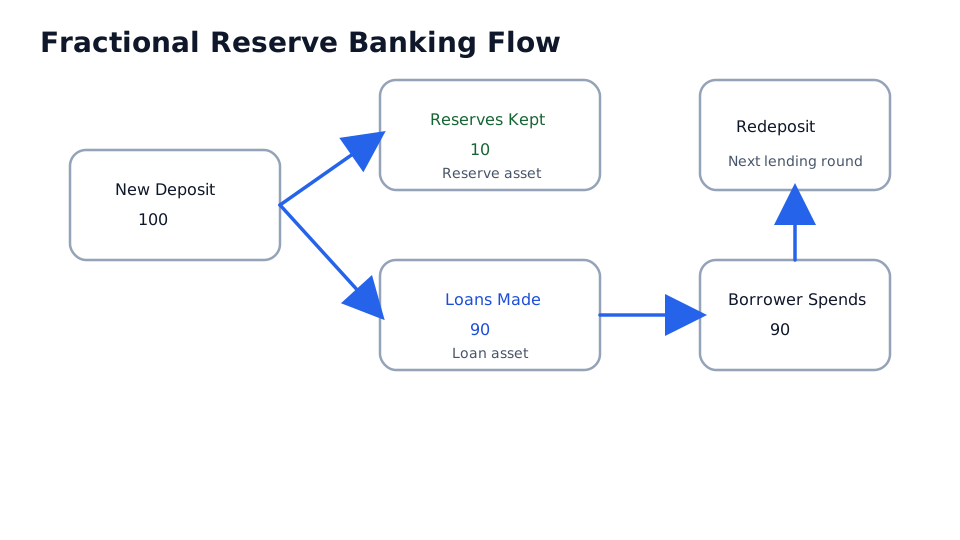
If a bank has $100 of deposits and keeps $10 in reserve, it can potentially lend out the remaining $90, subject to regulation, capital rules, and business judgment.
A Visual Example
An SVG helps here because the core idea is balance-sheet flow: deposit in, reserves held, loans made, and potential redepositing elsewhere in the banking system.
Why This Expands Credit
When loans are spent and the funds are redeposited elsewhere in the banking system, another bank may also keep a fraction and lend the rest.
That is the logic behind the money multiplier concept.
In reality, the process is constrained by:
- reserve rules
- capital requirements
- borrower demand
- bank risk appetite
- central-bank policy
So the simple multiplier is only a teaching model, not a complete description of modern banking.
Why Fractional Reserve Banking Can Be Fragile
The system works as long as not everyone demands cash at once.
If too many depositors try to withdraw simultaneously, a bank can face liquidity stress because much of its balance sheet is tied up in loans or other less liquid assets.
That is one reason bank runs are such an important concept in banking.
Fractional Reserve Banking vs. Full-Reserve Banking
Under full-reserve banking, deposits would be kept fully in reserve and not used for lending in the same way.
Fractional reserve banking instead accepts some liquidity transformation in exchange for a larger supply of credit to households and businesses.
That tradeoff is economically powerful, but it requires regulation, capital, and confidence.
Related Terms
- Banking: The broader system in which fractional reserve banking operates.
- Reserve Requirement: A rule that influences how much must be held back.
- Bank Run: A stress event tied to confidence and liquidity.
- Money Multiplier: A teaching concept related to redepositing and credit expansion.
- Liquidity: The key constraint that keeps the system stable or unstable.