Browse Investing
-
-
-
-
-
-
-
-
-
-
-
- Chartered Governance Professional
- ESRS
- Ethical Investing
- Green Chip Stocks Overview
- Green Fund: Comprehensive Guide
- IIRC
- Investing in Water
- Morningstar Sustainability Rating
- MSCI
- New Paradigm in Investing
- Social Audit
- Socially Conscious Investments
- Socially Responsible Investment
- Stewardship Code
- TCFD
- UN Principles for Responsible Investment (PRI)
Bond Yield: The Return Measure That Connects Bond Price, Coupon, and Maturity
Learn what bond yield means, how it differs from coupon rate, and why bond prices and yields move in opposite directions.
Bond yield is the return an investor earns from holding a bond, expressed as a percentage. In practice, “yield” can mean several related measures, so the term needs context.
The key idea is that yield connects:
- the bond’s cash flows
- the price paid for the bond
- the time remaining to maturity
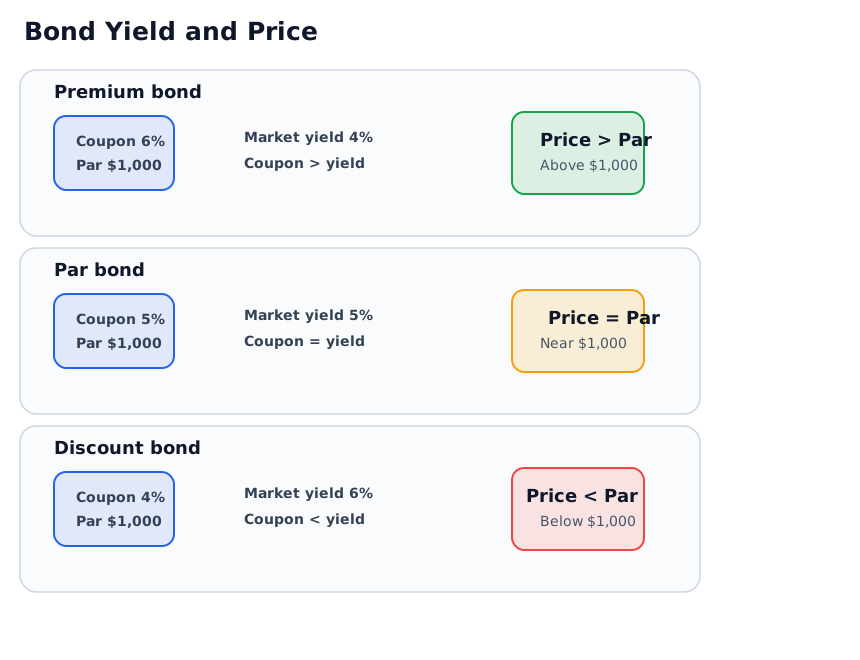
Bond price and yield move in opposite directions. The coupon is fixed, so changes in market yield show up as changes in price.
Why Bond Yield Matters
Bond investors do not care only about the coupon printed on the bond certificate. They care about the return implied by the price they actually pay in the market.
That is why yield matters more than coupon alone when comparing bonds.
Coupon rate
Coupon Rate is the annual coupon relative to par value. It is set at issuance and usually does not change.
Current yield
Current Yield equals annual coupon payment divided by the bond’s current market price.
Yield to maturity
Yield to Maturity (YTM) is the most comprehensive measure because it accounts for:
- coupon payments
- current market price
- time to maturity
- repayment of par at maturity
Price and Yield Move Oppositely
This is one of the most important fixed-income relationships:
- when bond prices rise, yields fall
- when bond prices fall, yields rise
Why? Because the coupon cash flow is mostly fixed. If investors pay a higher price for the same stream of payments, their return falls.
Premium, Par, and Discount Bonds
The relationship between coupon rate and market yield helps explain bond pricing:
- if coupon rate is above market yield, the bond tends to trade at a premium
- if coupon rate equals market yield, the bond tends to trade near par
- if coupon rate is below market yield, the bond tends to trade at a discount
Related Terms
- Coupon Rate: The fixed annual coupon as a percentage of par value.
- Coupon Payment: The actual periodic cash amount the bond pays.
- Yield to Maturity (YTM): The most complete commonly used bond yield measure.
- Current Yield: Annual coupon divided by current market price.
- Par Value: The principal amount usually repaid at maturity.